
To navigate the difficulties of international taxation, you need more than basic knowledge of definitions. You need a strategic look at how systemic shifts impact your bottom line. When considering how does VAT work, businesses struggle with the transition from conventional sales tax models to multi-stage consumption levies. Therefore, understand such nuances for maintaining compliance and optimizing cash flow in a globalized marketplace.
What is a Value-Added Tax (VAT)?
Value-added tax is a consumption. It is a levy applied to goods and services at every point where value is created, from raw material sourcing to the final retail transaction.
Unlike a single-stage sales tax, VAT mechanism ensures that the tax burden is distributed across the supply chain. To decode these layers, entrepreneurs should partner with a small business accounting firm in The Woodlands, Texas. Based on the total value added during production, the end consumer absorbs the final cost.
How Does VAT Work?
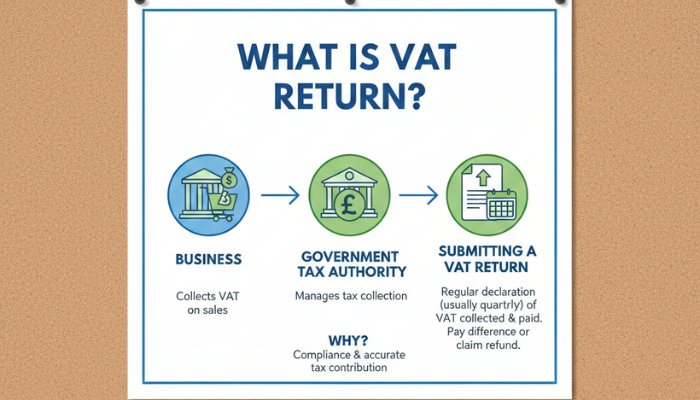
To comprehend how does VAT work, visualize a transparent ledger where tax is assessed on the gross margin at each manufacturing and distribution phase.
For instance, if a manufacturer buys materials, he/she pays tax on those inputs. When that manufacturer sells those materials to a retailer, he/she collects tax but only remit the difference to the government. This ‘input-output’ credit system prevents double taxation.
For domestic entities eyeing expansion, consult with our CPAs The Woodlands TX. We ensure that such complex margin calculations do not erode profitability.
History of Value-Added Taxes
The concept of taxing incremental value has roots dating back to 19th-century Germany. In 1954, VAT was popularized by French tax official Maurice Lauré.
Today, the majority of OECD nations utilize this system to create stable revenue streams. Interestingly, most industrialized nations have moved away from fragmented systems toward this unified model to enhance collection efficiency and modernize their fiscal infrastructure.
Pros and Cons of Value-Added Tax (VAT)
| Advantages | Disadvantages |
| Closes loopholes by taxing all sales stages. | Increases administrative and bookkeeping costs. |
| Provides stronger incentives to earn and save. | Can lead to higher retail prices for consumers. |
| Creates a stable, consumption-based revenue. | Risk of tax evasion without strict oversight. |
Effective business tax advisory is crucial here. Firms must balance these administrative burdens against the theoretical benefits of a streamlined tax code.
VAT in the US: Possibilities and Challenges:
In the US, the conversation regarding a federal VAT remains polarized. Proponents suggest that VAT could generate hundreds of billions in revenue. This can potentially reduce the federal deficit.
However, critics point to studies by the Baker Institute, suggesting potential job losses and reduced retail spending. Firms must utilize QuickBooks & bookkeeping services in this hypothetical scenario to manage the intense documentation required for multi-stage reporting.
How to Claim a VAT Refund?
Non-residents can reclaim taxes paid on tangible goods, like clothing or jewelry. Travelers can recoup a portion of their expenditures by:
- Maintaining rigorous records
- Submitting validated paperwork at ports of departure
Though, service fees typically apply.
What Does a Value-Added Tax Do?
VAT functions as a transparent, flat tax on consumption. It fragments the tax obligation. This ensures that the government collects revenue incrementally instead of waiting for the final retail point of sale.
Does the United States Have a Value-Added Tax?
No, the United States relies on a combination of federal income tax and localized state sales taxes. This decentralized approach makes the implementation of a national VAT politically and logistically challenging.
Who Benefits From VAT and Who Doesn’t?
Wealthier individuals benefit from VAT if it replaces progressive income taxes. In contrast, lower-income households may feel a disproportionate impact because a larger percentage of their earnings goes toward taxed necessities.
Can the Negative Effects of a VAT on Lower-Income People Be Fixed?
Governments mitigate regressive effects by:
- Exempting basic necessities, like medicine and groceries
- Providing targeted rebates to lower-income citizens.
Does the US Impose VAT?
The US remains the only major economy without a VAT. This is primarily due to the autonomy of state tax regimes. For localized guidance, L&Y Tax Advisors provides clarity on how current domestic structures differ from international mandates.
The Bottom Line
Evaluating how does VAT work reveals a sophisticated system designed for revenue stability and supply chain transparency. It offers a streamlined alternative to traditional sales taxes. But, its regressive nature and administrative demands remain significant hurdles. Mastering how does VAT work is the first step to navigate a world where consumption-based taxation is the global standard.