
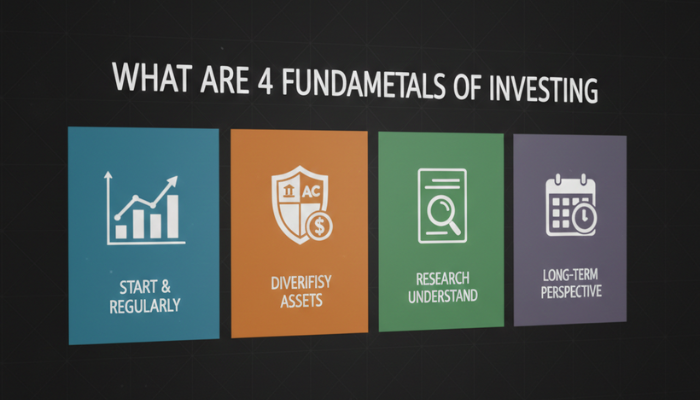

In today’s fiscal landscape, knowing the effective method to allocate capital ensures long-term wealth. Comprehending what are the 4 fundamentals of investing is the first step to achieve financial independence. So, master these core principles to navigate market volatility and build a resilient portfolio.
What is Investing?
Investing is the act of committing capital to an asset with the expectation of generating an income or profit over time. Saving focuses on capital preservation. But, investing leverages the power of compounding and market growth to maximize your net worth.
How Can I Start Investing?
Starting is simpler than ever. First, define your financial goals. Afterwards, open a brokerage account or consult a best CFO & business advisory service to create an individualized plan.
For businesses, L&Y Tax Advisors offers the strategic oversight that ensures your investment cycles are profitable and tax-efficient.
Types of Investments
To build a diversified portfolio, comprehend the primary asset classes available today:
| Investment Type | Description | Risk Level |
| Stocks | Equity ownership in a corporation | High |
| Bonds | Debt securities where you lend money to an entity | Low to medium |
| Funds | Pooled capital in Mutual Funds or ETFs | Varied |
| Investment Trusts | Companies that own and manage a portfolio of assets | Medium |
| Alternative Investments | Real estate, private equity, or digital assets | High |
| Options and Derivatives | Financial contracts derived from underlying assets | Very high |
| Commodities | Physical goods like gold, oil, or agricultural products | Medium to high |
What are the 4 Fundamentals of Investing?
Modern investment strategies are based on four pillars to guarantee sustainability and growth:
| Fundamental | Definition | Key Benefit |
| Asset Allocation | Spreading investments across various asset classes | Reduces overall portfolio risk |
| Diversification | Holding different types of securities within an asset class | Minimizes the impact of a single failure |
| Risk Tolerance | Assessing your ability and willingness to lose capital | Aligns your strategy with your comfort level |
| Time Horizon | The total length of time you plan to hold an investment | Maximizes the benefits of compounding interest |
How Can Investing Grow My Money?
Investing grows your money through
- Capital appreciation (the increase in an asset’s price)
- Dividend or interest income
- Benefit from ‘interest on interest’ by reinvesting these gains. This can lead to exponential growth over decades.
Is Investing the Same as Gambling?
Both ‘investing’ and ‘gambling’ involve risk. But, investing is based on scientific data, historical market trends, and economic fundamentals. Gambling depends on chance. Besides, it may not always be legitimate. Therefore, you must comprehend what are the 4 fundamentals of investing to make calculated decisions.
The Bottom Line
Mastering what are the 4 fundamentals of investing is the hallmark of a sophisticated investor. For businesses looking to scale, understanding what are fractional CFO services and what is the difference between a fractional CFO and a traditional CFO provides the high-level expertise to optimize these investments. Start today to secure your financial future!