
Dealing with a mounting pile of back taxes feels like an inescapable cycle. But, federal provisions exist to help taxpayers find a way out. Comprehending what is a tax forgiveness is the first step to reclaim your monetary stability.
If you are struggling with overwhelming debt, such programs offer a structured path to settle obligations for less than the original balance. L&Y Tax Advisors helps you identify the most effective relief strategies to move forward without the dogged pressure of IRS collections.
Tax Forgiveness Meaning
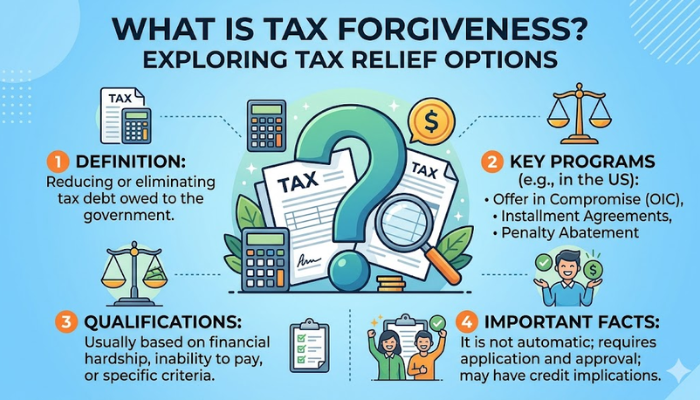
In tax administration, ‘forgiveness’ refers to the legal reduction or cancellation of a tax debt. It is not an automatic right. Instead, it is a negotiated settlement based on your inability to pay.
Authorities analyze your VAT number or individual tax identification to determine if your current assets and future income are insufficient to cover the full amount owed.
What is a Tax Forgiveness?
To truly grasp what is a tax forgiveness, look at the IRS Offer in Compromise (OIC) program. This is a formal agreement. The government allows you to settle your tax debt for a ‘compromised’ amount. The IRS evaluates your ‘Reasonable Collection Potential’ by looking at your:
- Monthly income
- Essential living expenses
- Equity in assets (like your home or car)
If the agency agrees that you cannot realistically pay the full amount before the statutory period expires, they may accept a
- Lower lump sum
- Series of periodic payments
This process requires meticulous documentation to prove that full payment would create an unfair economic hardship.
What is a Tax Forgiveness Example?
Consider a taxpayer who owes USD 50,000 but has lost his primary source of income. Also, he has no significant assets. After a thorough review, the IRS may determine that the individual can only afford to pay USD 5,000 over the next two years. If the OIC is accepted, the remaining USD 45,000 is essentially forgiven. It allows the taxpayer to start fresh.
How Do I Qualify For Tax Forgiveness?
Qualification hinges on financial transparency. You must:
- Stay updated with all filing requirements.
- Not be in an open bankruptcy proceeding
The IRS uses a strict formula to calculate what is tax yield from your current financial state. If that yield is lower than the debt, you may qualify for relief based on doubt as to collectibility or effective tax administration.
Which IRS Plan Allows Tax Forgiveness?
The primary vehicle for debt reduction is the Offer in Compromise. However, other programs like ‘Currently Not Collectible’ (CNC) status can pause collection activities if paying would leave you unable to meet basic living expenses. Though, this does not technically erase the debt like a formal settlement does.
How Much Does the IRS Charge in Penalties and Interest on Back Taxes?
Penalties for late filing and late payment can quickly inflate a balance. Interest is compounded daily. It is based on the federal short-term rate plus 3%. These costs make it imperative to seek a resolution early.
What Does the IRS Do to Collect Back Taxes?
If a debt remains unaddressed, the IRS may issue federal tax liens or levies. This can result in the seizure of:
- Wages
- Bank accounts
- Sale of personal property
How Long Can the IRS Collect Back Taxes?
Generally, the IRS has a 10-year Statute of Limitations to collect unpaid taxes. This period begins on the date the tax was assessed. Once the ten year window closes, the debt typically becomes uncollectible.
Conclusion
Securing a resolution for tax debt requires a strategic approach and a clear knowledge about what is a tax forgiveness. Utilize the right federal programs to mitigate the burden of penalties. Find a sustainable path to compliance. Take action today so that your future wealth remains protected from unwanted collection tactics.