
In the high-stakes environment of global commerce, understanding what is VAT return protocols is the difference between fluid cash flow and a frozen audit. For modern enterprises, this isn’t just about filling out forms; it’s a strategic reconciliation of the tax you’ve collected versus what you’ve spent. Mismanaging this balance leads to ‘tax leakage,’ where businesses effectively lose money by failing to reclaim what they are legally owed.
Definition of a VAT Return
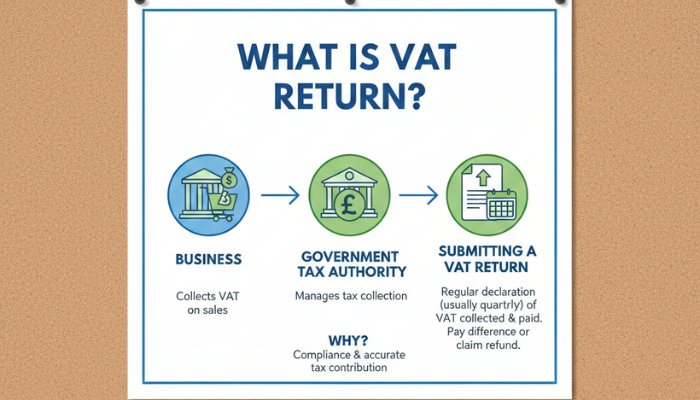
At its core, this document is a formal declaration submitted to tax authorities that summarizes your taxable transactions over a specific period. Partnering with a small business accounting firm in The Woodlands, Texas ensures that these definitions translate into accurate data entries. It serves as the official record of your ‘Input Tax’ (on purchases) and ‘Output Tax’ (on sales), determining your net liability.
What is VAT Return?
To view it through a problem-solving lens, what is VAT return management if not an exercise in precision? It is the mechanism by which a business proves it has acted as a loyal tax collector for the government. If your accounts are messy, you risk overpaying. By utilizing professional QuickBooks & bookkeeping services, companies can automate the tracking of these tax points, ensuring that every cent of deductible input tax is captured to offset the output tax owed.
Example of a VAT Return
Imagine a tech company buys $10,000 worth of servers (paying $2,000 in tax) and later sells software services for $50,000 (collecting $10,000 in tax). The return isn’t a bill for $10,000; it’s a calculation showing a $8,000 payment is due. Navigating these nuances often requires specialized business tax advisory to identify which complex digital services or cross-border trades might actually be zero-rated, significantly altering the final calculation.
Who is Eligible for VAT Return?
Eligibility often begins the moment a business hits a specific revenue threshold, but ‘voluntary registration’ is a tool many savvy founders use to reclaim tax on heavy startup costs. Consulting with CPAs The Woodlands TX can help you determine if registering before you are legally required to is a smart move for your specific capital expenditure profile.
What is the Purpose of Filing a VAT Return?
The primary purpose is to settle the account between the entity and the state. However, for the business owner, the purpose is financial transparency. It prevents the accumulation of ‘hidden’ tax debts that can sink a company during a year-end review. By maintaining a rigorous filing schedule, you ensure that your business remains a ‘going concern’ in the eyes of creditors and regulators alike.
Who is Required to File a VAT Return?
Any business entity that exceeds the statutory turnover limit – or expects to – is mandated to file. Failure to do so results in compounding penalties that can dwarf the original tax amount. This is where L&Y Tax Advisors steps in, providing the oversight necessary to transition from manual tracking to a sophisticated, compliant digital filing system that meets the latest ‘Making Tax Digital’ standards.
How To File Your VAT Return?
Modern filing is almost exclusively digital. You must aggregate your digital sales records, verify the tax codes applied to each invoice, and submit the data through an approved portal or API. The process must be iterative; waiting until the deadline to ‘find the receipts’ is a recipe for disaster. Real-time logging is the only way to ensure the numbers you submit are defensible under audit.
The Bottom Line
Ultimately, mastering what is VAT return logic is about protecting your margins from administrative erosion. It is a recurring financial health check that, when handled with professional rigor, supports long-term scalability. If you want to dive deeper into how these filings impact your specific industry’s cash flow, would you like me to draft a custom compliance calendar for your fiscal year?