
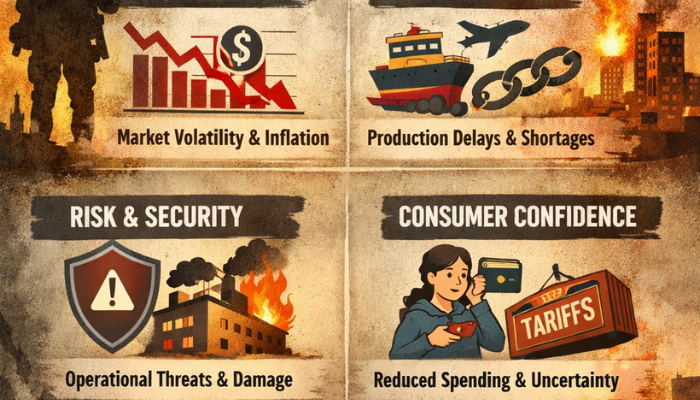

The global landscape is shifting fast this year, and learning how do wars affect businesses is no longer just for historians. It is a survival skill for modern entrepreneurs. When conflict breaks out, the immediate reaction is often a “wait and see” approach. But, the economic gears never stop turning.
For companies working with Blueprint Advisors, the focus shifts from standard operations to aggressive resilience. Conflict creates a ripple effect that touches everything from the cost of raw materials to the complexity of international filings.
What Businesses Do Well During War?
It may feel counterintuitive. But, certain sectors experience a surge in demand when geopolitical tensions rise. The following firms often see a sharp uptick in government contracts:
- Aerospace
- Defense
- Cybersecurity
However, it is not just about heavy machinery. Logistics providers and energy companies frequently pivot to fill gaps left by closed borders or sanctioned trade routes.
During such shifts, comprehending “What is a threshold in business?” becomes vital for smaller suppliers who suddenly find themselves crossing revenue limits that trigger new regulatory and tax obligations.
Is War Good or Bad For Business?
The answer is rarely a simple “yes” or “no.” Some industries thrive. But, the majority face a “broken window” reality where capital is diverted from innovation to basic repair and security.
Most owners find that how do wars affect businesses most directly is through “uncertainty tax” – an invisible cost where investment stalls because no one knows what tomorrow’s tariffs or energy surcharges will look like. This environment makes it difficult to plan long-term growth. Traditional market signals become clouded by
- Political maneuvers
- Emergency fiscal measures
How Do Wars Affect Businesses?
The most visible impact is found in the supply chain. We are currently seeing shipping routes being rerouted around conflict zones, adding weeks to transit times and doubling fuel surcharges.
To counter this, savvy businesses are moving away from “Just-in-Time” inventory to “Just-in-Case” stockpiling to solve the problem of unpredictable shortages.
This strategy requires a deep dive into “What is the monetary policy and fiscal policy of the United States?” as interest rate hikes follow the inflation triggered by these very supply bottlenecks, directly affecting your cost of capital.
How Do Companies Benefit From War?
Besides direct defense spending, companies benefit by becoming “problem-solvers” for a disrupted world. Firms that gain a massive competitive edge as global dependencies fail are those that specialize in:
- Resource efficiency
- Alternative energy
- Localized manufacturing
Businesses turn a crisis into a catalyst for modernization by:
- Diversifying their supply base
- Digitizing their logistics
Such a proactive stance ensures that even when global trade hits a snag, the internal operations remain lean and tax structures stay optimized for maximum cash flow preservation.
What is the Impact of War on Global Businesses?
On a global scale, wars affect businesses by forcing a total rethink of risk management and international cooperation. Whether it is adjusting to fluctuating currency values or finding alternative suppliers in neutral zones, the goal is to remain agile.
We see a trend toward “friend-shoring,” where trade is moved to politically stable allies to mitigate the risk of sudden sanctions. Stay informed and prepared to ensure your enterprise does not just survive the friction but finds a way to move through it with strategic confidence.
The Bottom Line
The question, “How do wars affect businesses?” is answered by those who can adapt their monetary and operational strategies in real-time. The goal is not just to weather the storm but to rebuild your business model to be more robust than it was before the conflict. Focus on liquidity. Diversify your supply chain. Seek expert advisory to turn geopolitical instability into a manageable business variable rather than a catastrophic event.