

Is there toll tax in USA? Yes, toll taxes are a common way to finance the construction and upkeep of road infrastructure. These charges vary according to location, vehicle type, and distance traveled. They are typically imposed on vehicles that use certain roadways, tunnels, and bridges.
L&Y Tax Advisor further explains ‘Is there toll tax in USA?’. As of 2025, several changes have occurred in the nation’s toll taxation system.
What is a Toll Tax?
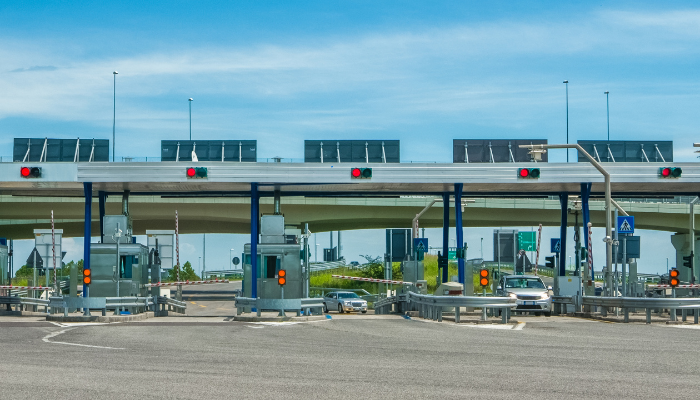
A toll tax is a direct charge for using a specific stretch of road, bridge, or tunnel — and that specificity is exactly what sets it apart from general taxation. You pay because you used it. Not because everyone else did.
The principle at work is clear and logical: the people who benefit from a piece of infrastructure are the ones who fund it. No broader cross-subsidization, no ambiguity about who’s paying for what.
Unlike broad-based fuel taxes, a toll is a precise, location-specific transaction. The rate structure is rarely arbitrary; it is typically calibrated to vehicle classification, with multi-axle commercial trucks incurring substantially higher charges than two-axle passenger cars due to their disproportionate impact on pavement wear and structural stress.
Is There Toll Tax in the USA?
Whether you’ll pay a toll in the United States isn’t a question with a single answer – because there is no single authority deciding it.
The federal government doesn’t impose a national toll. What exists instead is a decentralised network of state, county, and regional authorities, each operating independently and on their own terms.
The result is a patchwork that varies dramatically depending on where you’re driving, from the sprawling E-ZPass network across the Northeast to cashless corridor systems in Texas and Colorado that operate entirely differently.
Consequently, the presence and cost of tolls are entirely dependent on your specific route, with many interstate highways remaining free while parallel express lanes require payment for a guaranteed high-speed commute.
Read: How much does liberty tax charge?
Recent Modifications to Toll Regulations
The federal government’s decision to dissolve New York City’s congestion pricing scheme is one such instance. This January 5, 2025, project aimed to ease traffic in Manhattan by charging a $9 fee for cars to access the region south of Central Park.
However, the US Department of Transportation revoked its approval of the program due to upcoming legal challenges, expressing worries about the financial burden on small companies and working-class Americans.
The Metropolitan Transportation Authority (MTA) is attempting to restore the program, and this activity has resulted in continuing legal challenges.
State-Specific Toll Adjustments
Other states have changed their toll rates for 2025, including New York. The Garden State Parkway and the New Jersey Turnpike saw a 3% rise in New Jersey.
For example, the usual cash charge increased to $2.30 at several Parkway toll plazas, with E-ZPass users receiving a reduction. By switching to a distance-based system, the Pennsylvania Turnpike Commission also announced a 5% toll increase that might lead to lower charges for certain vehicles. These modifications are a component of continuous initiatives to get financing for transportation infrastructure.
Read: What is the tax yield?
Tax Implications of Toll Payments
Tax-wise, toll costs are deductible for independent contractors when they are incurred for business. However, according to provisions in the Tax Cuts and Jobs Act that go into effect from 2018 through 2025, employees are not allowed to deduct tolls, even if their employers do not pay them. To guarantee compliance with current IRS laws, taxpayers must keep accurate records of their toll costs and seek advice from tax specialists.
Read: What is a VAT number in the US?
The Future of Tolling in the US.
The US tolling sector is expected to continue changing. Mileage-based user costs are being considered as a viable substitute for conventional gas taxes. This strategy aims to ease worries about diminishing gasoline tax receipts due to rising electric car usage and improved vehicle fuel economy.
The toll business is urged to work with state transportation agencies to create customer-friendly models that ease this transition while resolving privacy issues and guaranteeing the fair treatment of all drivers.
The Bottom Line
Now you know the answer to ‘Is there toll tax in USA?’!
Toll taxes remain essential to the US strategy for financing and preserving its road system. All road users must know these developments as rules and pricing continue to alter in response to technical, economic, and environmental issues.