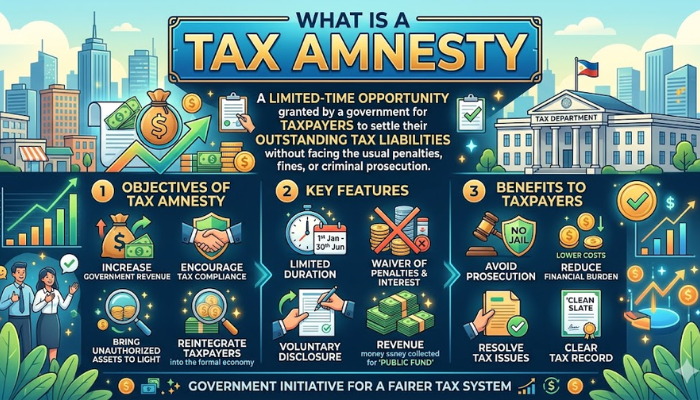

Facing overdue tax obligations can feel like a mounting weight. But, comprehending what is a tax amnesty can provide a structured path towards resolution. These programs are periodic, limited-time opportunities offered by revenue authorities. They allow individuals and businesses to settle their outstanding liabilities. By stepping forward voluntarily, taxpayers can avoid the most severe consequences of past non-compliance, such as:
- Criminal prosecution
- Excessive penalties
Tax Amnesty Definition and Purpose
At its core, an amnesty is a legislative ‘clean slate’ initiative. The primary goal is to bring ‘shadow economy’ funds into the formal system and increase immediate revenue for the government without the high cost of individual audits. For the taxpayer, it serves as a strategic window to correct errors or omissions in previous filings while demonstrating a good-faith effort to return to the system.
Tax Amnesty IRS
The federal government rarely offers a ‘blanket’ amnesty in the traditional sense. The IRS provides various permanent voluntary disclosure programs. These are designed specifically for those who have failed to report income or foreign assets.
Participate in such programs to proactively resolve issues before they are flagged by an investigation. L&Y Tax Advisors can help you determine which disclosure path minimizes your specific risk profile.
Strategic Resolution: What is a Tax Amnesty?
When evaluating what is a tax amnesty, focus on:
- The mitigation of interest
- The waiver of civil penalties
Instead of waiting for a notice of deficiency or a lien, a proactive application through an amnesty window allows a taxpayer to negotiate terms that may be unavailable during a standard collections process.
Tax Amnesty Example
Consider a scenario where a small business owner discovered an error in their payroll tax filings from three years ago. If a state-level amnesty is active, that owner could pay the back taxes in full. In return, the state may waive 100% of the late-payment penalties. This shift from a defensive to a proactive stance is a hallmark of what is a tax amnesty.
What are the Types of Tax Amnesty and Their Uses?
Amnesties generally fall into two categories:
Broad Tax Amnesty
Broad tax amnesty covers various tax types (income, sales, or property).
Targeted Tax Amnesty
Targeted tax amnesty programs focus specifically on offshore accounts or specific industries.
Who is Eligible for Amnesty?
Typically, eligibility is reserved if you have not yet been contacted by the IRS or relevant revenue agency regarding the specific debt. If you are already under audit or criminal investigation, the window for amnesty closes.
Where to Apply for Amnesty?
Applications are submitted directly to the governing revenue department. It requires a full disclosure of:
- Previously unreported data
- Immediate payment (or an agreed-upon payment plan) for the principal tax owed
Who Pays for Amnesty?
The taxpayer remains responsible for the original tax amount. However, the ‘cost’ is significantly lower than a standard audit. The punitive interest and late fees are either reduced or eliminated entirely.
The Bottom Line
Knowing what is a tax amnesty is the first step in reclaiming your monetary peace. Leverage such time-sensitive programs. Transition from a state of delinquency to full compliance. Make sure that your assets remain protected and your reputation with the authorities stays intact.
Read More: